Building Blanket Dens Again
Reclaiming Childlike Freedom in a Performance Culture

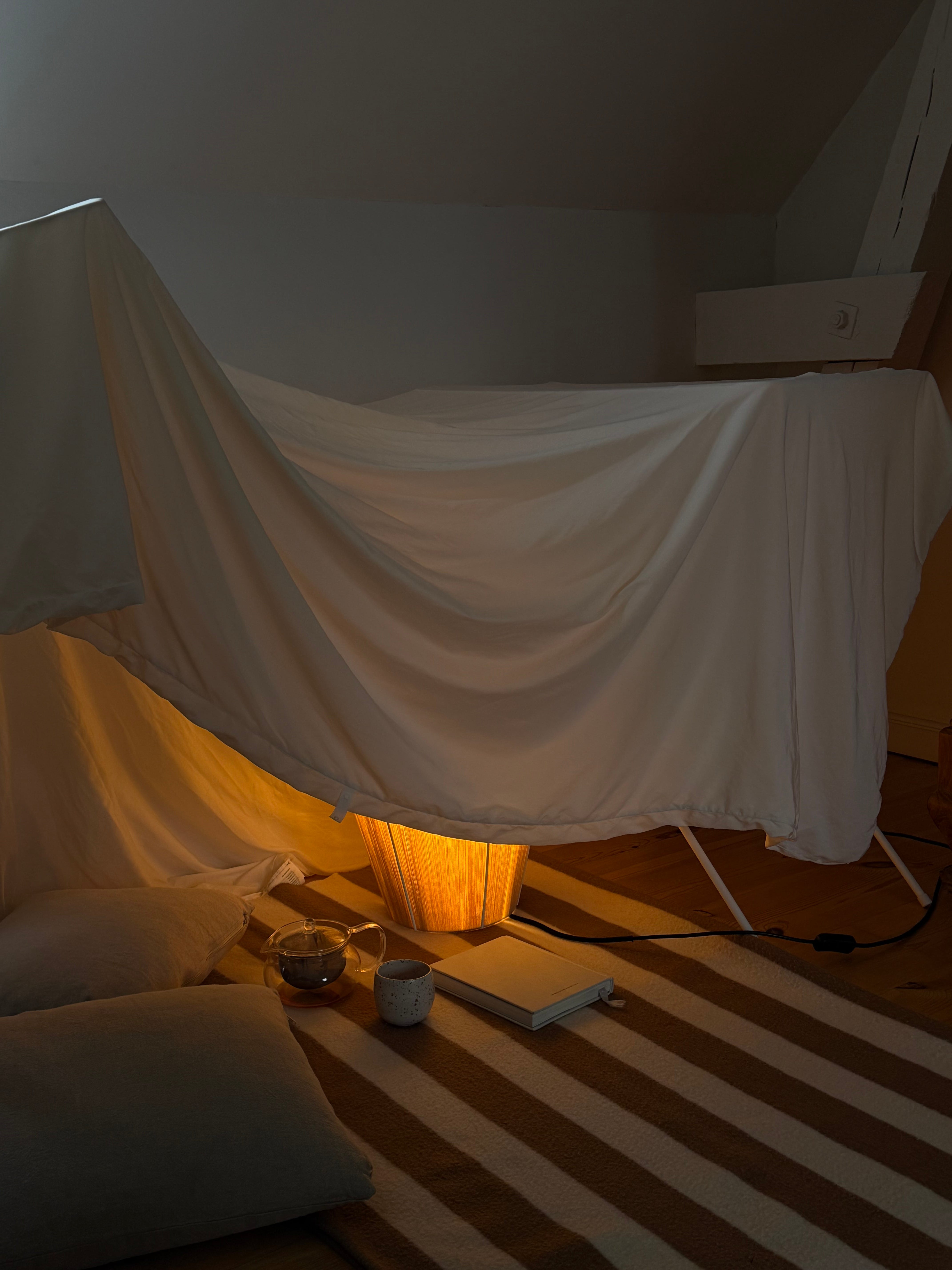
I was home doing laundry the other day when something slipped from my hands and rolled under the drying rack where my freshly washed bed linen was hanging. I bent down to retrieve it and somehow, as if gently pulled by an invisible string, I found myself crawling further in, gently lowering onto my back and looking up.
Above me was the simple scaffolding of the drying rack, the half-wet silk sheet draped on top of it. The floor perspective suddenly transported me back, as if stepping into a time machine. Back to the constructions I was obsessed with building as a child. Back to blanket dens and playing make-believe.
The nostalgic, almost primal images suddenly flooded the eye of my mind as I lay there on the wooden floor staring upward. The feeling of being small and fragile, but completely protected. Shielded inside a cosy cave I had built entirely for myself. Away from the gaze of adults, parental control, the rules, all of the do’s and don’ts.
A small space that felt like autonomy, a soft rebellion and sovereign territory tucked inside the large world above it.
Inside, notes were written. Secrets whispered. Candy hoarded. Stickers pressed onto the underside of the “roof.” Chairs and tables were stretched with wool blankets, structural engineering of the highest childhood calibre. The duvet dragged in. The more pillows, the better. Obviously.
I remember playing there for hours, getting lost in the depths of my imagination. Fantasizing about the future. Who I would become when I grew up. Sometimes crawling in there and reading under a torchlight long past bedtime. Writing things I never wanted anyone to read. Leaving only to smuggle in more supplies.
There are faint, but tactile memories of falling asleep inside of it, until one of my parents noticed and carried me back to bed.
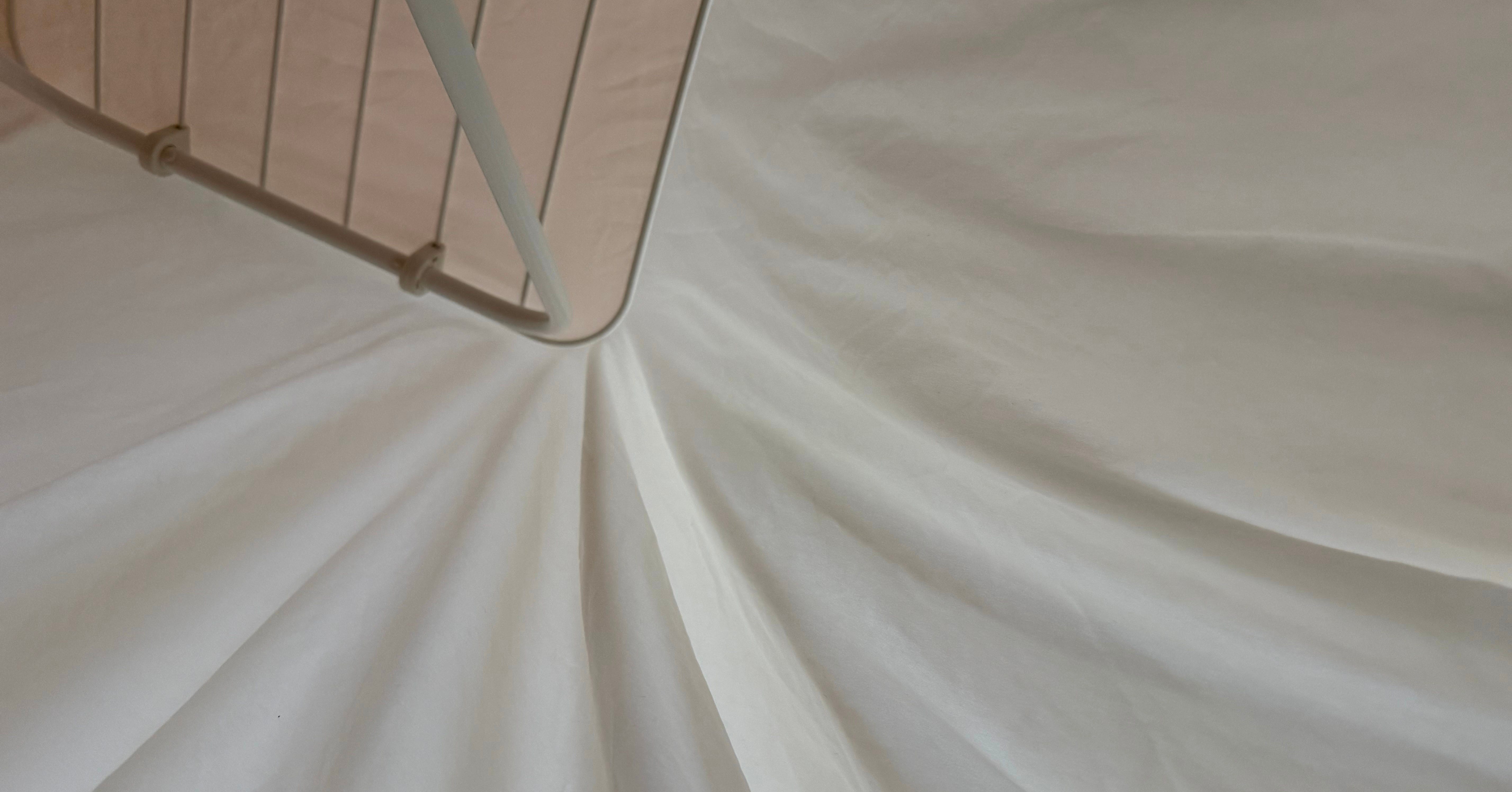
Lying under the sheet in that moment, I remembered how free expression once lived so effortlessly in my ealier days. Being playful and imaginative. Fooling around without thinking about how it looked or what others would think. Creating these imaginary worlds.
All of this made me wonder:
Where did that sense of play go?
When did it begin to thin out, to retreat from the center of my days?
What replaced it?
Beyond my own guesses about when I misplaced it, I suspect it happens somewhere in the adolescent years. The age when we begin rehearsing our adulthood selves. Wanting to appear more serious, put together, and sophisticated than what feels like authentic expression. Pulling on composure and quickly learning what is rewarded by our society. Exchanging spontaneous joy for social calibration.
Exploration is replaced by evaluation and the watchful gaze of our own worst inner critic.
First comes the grades.
Deadlines.
Comparison.
Performance.
Salaries.
Reputation.
Status.
The nervous system becomes more attuned to threat than curiosity. And play, which requires experimentation and the willingness to look foolish, slowly begins to recede. We start overthinking and rehearsing the consequences. Calculating outcomes before we decide to take action.
I’m thinking about the teenager who stops dancing because someone laughed.
The adult who says, “I’m not creative.”
The professional who holds back a wild idea in fear of appearing unserious.
All of this caused by the inner critic “protecting” us from perceived danger or humiliation.
In cultures that reward productivity and composure, play has little measurable return. And when something cannot be optimized or displayed, it becomes deprioritized.
The wins of play
Developmental psychology shows that imaginative play is a foundational component of emotional regulation, social intelligence, and cognitive flexibility. It teaches to rehearse risk in low-stakes environments, which in turn supports the ability to take risks and put ourselves out there in our adult lives. Thus, it strengthens the neural pathways of courage to try something new, step out of your comfort zone, put yourself out there, take the lead, and be visible.
When we play, our cognitive flexibility and sense of safety in the world increase. When we feel safe, curiosity rises. And when curiosity rises, we are more willing to take risks.
The brain shifts from threat detection to exploration. Stress hormones decrease. Dopamine increases. We become more open to new ideas, more adaptable in the face of uncertainty, and more resilient when things don’t go as planned.
Play strengthens our tolerance for experimentation and invites improvisation. It softens perfectionism. It allows us to rehearse possibilities without immediate consequences.
Play is one of the few forces that brings back the magic again. It’s the antidote to calculation. It allows us to move without deciding who we must become as a result.
Borrowed Joy
Anyone who is lucky to have a small child in their family knows that laugh.
You hear it once and suddenly realize:
oh. This is what joy sounds like.
High-pitched. Uncontrolled and completely unburdened. Rising from the belly. It is contagious and completely unselfconscious. It moves me to tears.
When I enter the world of my 2,5 year old nephew, I feel my own edges softenHe requires complete presence, and the reward is immediate. I am simply there. The rational mind waits outside. For a while, not performing adulthood.
And yet I find myself wondering: must play always be borrowed from children?
What would it look like to reclaim it in our own adult lives, through deliberate permission? What is the adult version of a den? What is the grown-up equivalent of laughter that forgets itself?
I want to blast music in the living room, hair loose, and dance as if nobody is watching. I want pajama parties with so much popcorn that your lips are sore from the salt. Deep belly laughs. Laughing until you’re crying.
I want to play charades and commit so fully to pretending that I forget myself for a moment. Spaces where nothing has to be optimized or shared on social media. Where you allow yourself to make a mess while painting, scribbling, or cooking without a recipe. It could mean dancing in the kitchen while the pasta boils. Singing in the shower. Lying on the floor for no reason. Stargazing. Going to the beach and making drawings with your fingers in the sand.
Whatever quietly calls to you and sparks genuine joy is likely the thing worth playing with.
Play rarely announces itself as something important. It appears small. Slightly pointless. Easy to postpone. And yet it is often the very space where imagination, curiosity, and courage begin to return.
So sometime this week, go on a spontaneous trip. Or carve out space for that thing you’ve been meaning to do but never quite find the time for. Or build a small den like I did the other day. Grab a few blankets and pillows. Crawl under. Bring a notebook. Or a novel. Or a thermos filled with your favorite drink.
Stay there longer than feels reasonable.
Notice what shifts.
Or what returns.
If you try it, tell me what you discovered. I would genuinely love to hear.
xx
S